Our Location
304 North Cardinal St.
Dorchester Center, MA 02124


Someone logged into your WordPress site with a real password, and you never had a breach. That’s what makes credential stuffing so unsettling — it’s not guessing, and it’s not a vulnerability in your site at all.
It’s a normal risk every site faces, not a sign you did something wrong. Credential stuffing uses real username and password pairs leaked from other sites’ data breaches, then tries them against your login. It works because a large percentage of people reuse passwords across multiple sites.
This guide explains how credential stuffing actually works, why it’s harder to stop than a typical brute force attack, and which defenses actually reduce your risk.
Quick Answer: Credential stuffing can’t be fully blocked, but you can make your site a much harder target. Combine rate limiting, a custom login URL, and geo blocking to cut off most automated attempts, then encourage unique passwords and two-factor authentication so even a matched credential pair fails.
Billions of credential pairs from historical breaches sit on the dark web and hacker forums. These lists are organized, de-duplicated, and often pre-sorted by domain — making it easy to target WordPress sites specifically by testing the email-based usernames common across WordPress installs.
WordPress’s predictable login URL at /wp-login.php makes targeting even easier. A credential stuffing bot doesn’t need to discover the login endpoint. It already knows where it is on every WordPress site, so the attack starts immediately.
The key difference is efficiency. A brute force attack tries many passwords against one username, or many combinations at random. It succeeds eventually without a lockout in place, but it needs a very high volume of attempts.
Credential stuffing tries real pairs. Each attempt is a credential that actually worked somewhere else. The success rate per attempt is dramatically higher, so the attack can succeed even against low rate-limiting thresholds. A bot with 5 attempts per IP per 30 minutes can still try 5 real, targeted pairs — and if even one matches a user on your site, it’s in.
That’s why credential stuffing is harder to stop than brute force, and why the defenses need to work at multiple levels.
BruteFort implements both defenses below from one settings panel.
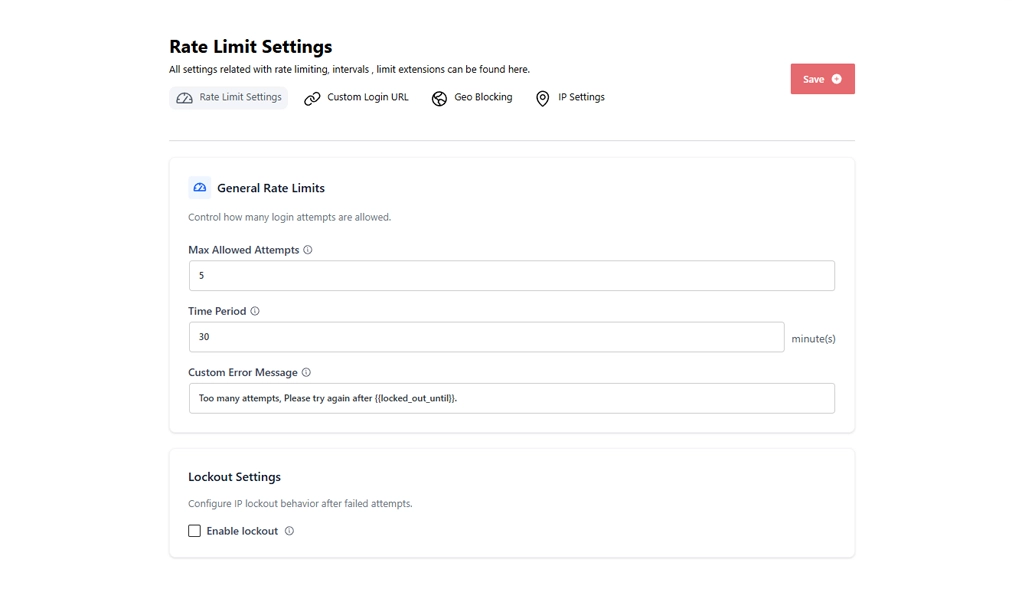
Even though credential stuffing is more efficient than brute force, rate limiting still raises the cost and slows the attack. BruteFort’s rate limiting caps failed attempts per IP within a time window. Distributed campaigns — attempts spread across many IPs — are harder to stop this way, but it eliminates the volume attacks that most bots rely on.
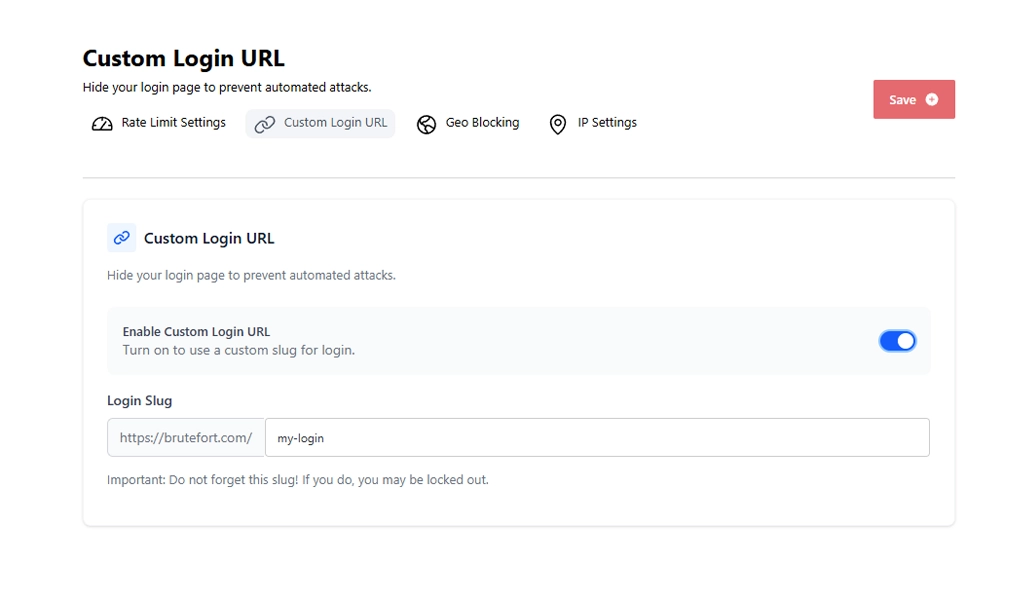
BruteFort’s Custom Login URL feature moves your login page away from /wp-login.php. Bots running credential stuffing campaigns against WordPress specifically target that path. Move it somewhere unpredictable, and those bots have nowhere to send their credential lists. This is one of the single most effective changes you can make against both brute force and credential stuffing.
Credential stuffing infrastructure tends to concentrate in specific regions. BruteFort’s Geo Blocking lets you restrict login access by country — either blocking high-risk regions or whitelisting only the countries where your actual users are. This won’t stop every attack, but it eliminates a meaningful share of credential stuffing traffic before it reaches the login form.
Credential stuffing only works when people reuse passwords. Enforcing strong, unique passwords — and encouraging a password manager — closes the reuse gap. WordPress’s built-in password strength indicator helps, but it doesn’t enforce uniqueness.
Pro Tip: Two-factor authentication is the most complete defense. Even a matched credential pair from a breach can’t log in without the second factor.
The most direct signal is a successful login from an IP you don’t recognize, or login activity from a user account at an unusual time or location. BruteFort’s Logs screen shows lockout events from failed attempts. Successful logins don’t appear there, but you can review WordPress user activity or use an activity log plugin to flag unusual sign-ins.
It helps somewhat. Breach databases often include the specific username used on the breached site. If that happens to match your WordPress username, the credential pair works. A unique, non-obvious username — not your email, not “admin” — forces credential lists to guess it correctly, reducing the odds of a successful stuffing attempt against your admin account.
Yes. Any account on your site is a potential target. Membership sites, WooCommerce stores, and any site where users register accounts are all vulnerable to credential stuffing against their user base, not just the admin account. Rate limiting and a custom login URL protect the login endpoint itself, regardless of which account is targeted.
Yes. BruteFort’s rate limiting and custom login URL are both directly effective against credential stuffing campaigns. Rate limiting makes high-volume attacks impractical. The custom login URL makes your site invisible to bots targeting the default WordPress login path. For the highest-risk sites, pair BruteFort with two-factor authentication for the strongest available defense.
Credential stuffing succeeds because of password reuse, not because of any weakness in WordPress itself. The defenses are straightforward: protect the login endpoint with rate limiting and a custom URL, encourage unique passwords for all accounts, and add two-factor authentication for admin accounts. BruteFort handles the login endpoint side with no configuration overhead.
You might also like:

